For podcast hosts & producers
Eight stories, one guest. Pick the angle that fits your show.
Rather than pitch the whole life story at once, I've broken it into angles and sorted them by the kind of show each one suits. Happy to go deep on just one and leave the rest alone.
Hear me tell one first
Five minutes of a much longer story.
This is one piece of the mafia-family angle below, not the whole of it. On a show I can take you into the bust and what happened to the people caught in it, including the American friend who served his sentence in an Italian prison. I can tell you about the favor his father asked of me, which was to watch out for his son and keep him out of the business. I kept it. And I can tell you about the grandmother in that one-room house, who changed the direction of my life more than anyone else in the story.
It is also a straight sample of the audio you would be getting, recorded on the setup described further down this page.
5:06 · Download MP3
I was living Under the Tuscan Sun eleven years before the book came out
January 1985, nineteen years old, moving to Italy alone without a word of the language. I left a house in the Hollywood Hills and a Porsche for a $1,000 car and a $150-a-month apartment. On the trip that decided it I drove past a derelict farmhouse every night and thought about restoring it. I also met Paola on that trip. A year later she took me to see her family's country house and it turned out to be the same building, in her family for three hundred years. Frances Mayes bought hers with a whole career already behind her. I got there at nineteen with nothing and married into mine.
Best for: Travel, expat-life, Italy/lifestyle, and home-renovation podcasts
At eighteen I moved in with a mafia family
My father had just died, the house I grew up in had burned down, and the people who took me in were the same family who had shown me Italy in the first place. I knew what they were. They knew I knew. We never said it out loud, not once. Everyone involved is dead or in prison now, and I don't name names.
Best for: Memoir, true-crime-adjacent, and long-form interview shows
We were worth $150 million on paper. I sold the company for one dollar.
Our flagship product was in the top 2% of all business software in the country. The Navy ran it and hired us for security work. Then the crash took our customers, the lawsuits took the rest of me, and in 2006 I sold the whole thing to the one employee who had stayed through the worst of it. For a dollar.
Best for: Founder, exit, and burnout podcasts
After forty years the town stopped calling me the American
Almost nothing about Italy made sense to me at first. Car registration paid for with stamps bought at the tobacco shop, which is also the only place you can buy salt. A grandmother who tested me for the evil eye by dropping oil into water, found I had it, and cured me with a wet thumb and a prayer. Meals that ended whenever somebody decided they had ended. It took me a long time to work out that the things I thought were broken about this country are the exact things everyone flies here for, and longer still to stop resisting them and start preferring them. I am an Italian citizen now. I am not the foreigner in town anymore.
Best for: Italy and culture shows, expat life, and conversational interviews that want stories rather than a thesis
I called the dot-com bubble in 1999 and got laughed at
I spent that year on conference panels telling rooms full of people the valuations were insane and the whole thing was going to crack open. Same year, I turned down a VC who wanted to take us public. I was right about the market and wrong about my own company. I'm watching the identical reflexes play out around AI right now.
Best for: Tech-history, internet-nostalgia, and AI/foresight shows
We keep more than 70% of what our guests spend in the towns they visit
Twenty years, eight countries, two continents, no middlemen, and published research behind the model. Anti-extractive travel isn't charity. It turns out to be better economics once you measure the right thing.
Best for: Sustainable-travel, impact-business, and social-entrepreneurship podcasts
I walked away from a C-suite offer because my hobby business was quietly winning
During the Great Recession I took a turnaround-consulting contract with an option into the C-suite and a cut of online sales. The company ignored my advice for six months. Meanwhile the 'little tour company' I'd started as a side project was selling out despite the recession. I bailed on the guaranteed money.
Best for: Entrepreneurship, decision-making, and "hard choices" business podcasts
The full arc, for long-form flagship shows
A childhood of money and funerals, Italy at nineteen, a garage software company, $150 million on paper, the crash, the lawsuits, a one-dollar exit, a farmhouse in my wife's family for three hundred years brought back from near ruin, and an accidental travel company now running across eight countries.
Best for: Deep, hour-plus biographical interview shows
How I record
I record from a dedicated studio room at the villa in Soriano nel Cimino, not a laptop on a kitchen table. Studio mic, headphones always, and a local backup track running on every session, so a dropped connection costs you nothing. Elgato Facecam if you film. I’m on Central European Time and I will move my day for the right show.
- Time zone
- Central European Time, flexible either direction
- Backup
- Local track on my end every time, sent after
- Languages
- English and Italian, either one
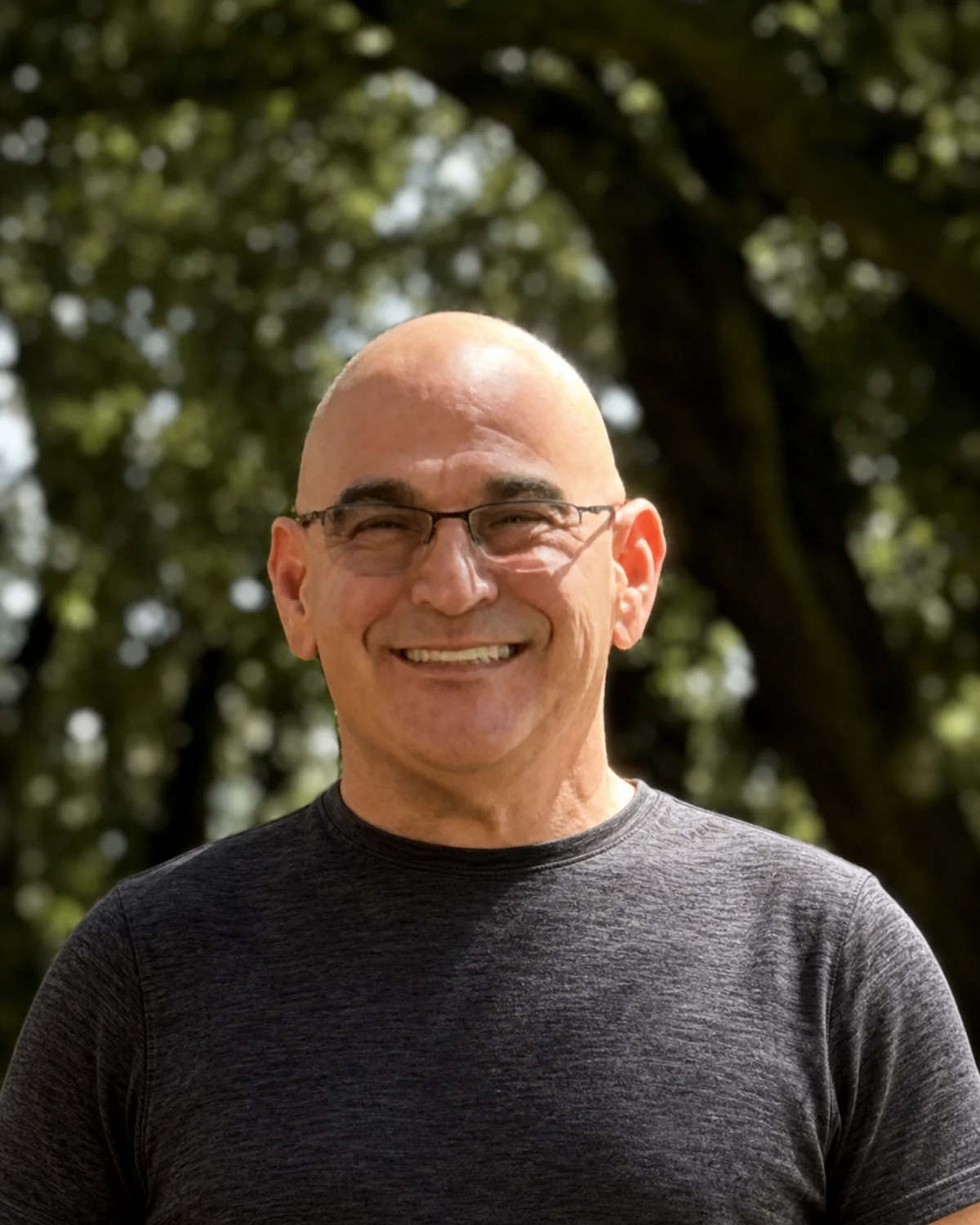
Bio, for show notes
One line
Michael Kovnick is an internet pioneer turned founder of Culture Discovery Vacations, one of the largest small-group tour operators in Europe, built on giving more to the places it visits than it takes.
Short
Michael Kovnick moved to Italy alone at 19, later built Cyberspace HQ, one of the earliest internet companies, out of his garage, and won Best of eBusiness at Comdex in 2001. After surviving the dot-com crash and years of litigation, he sold the company for a dollar in 2006 and started Culture Discovery Vacations almost as a hobby. Twenty years later it's one of the largest small-group tour operators in Europe, operating across eight countries on an anti-extractive model that keeps 70%+ of guest spend in local economies.
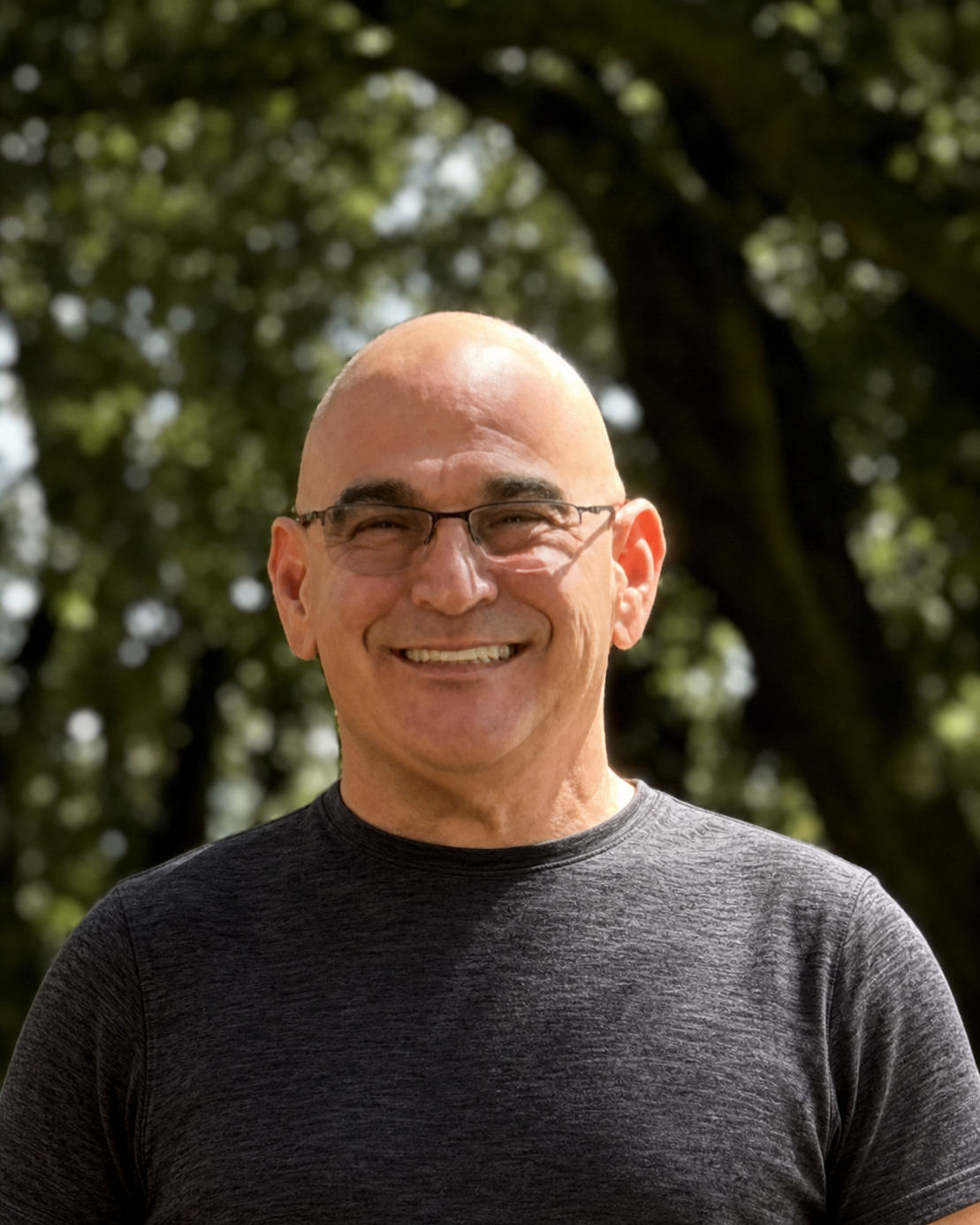
Long bio
Roughly 600 words, for shows that ask for one.
Michael Kovnick grew up in Los Angeles with money and not much else. By his late teens he had been to more funerals than most people attend in a lifetime, including his father's, and had inherited millions he had no idea what to do with. A trip to a one-room house in Calabria in 1983 gave him the first thing that had felt real in years. In January 1985, at nineteen, he left the Hollywood Hills for a $150-a-month apartment in Italy and a car that cost him a thousand dollars.
He came home two years later fluent, and in 1994 started what became Cyberspace HQ, one of the first internet and e-commerce companies, back when most people had no email address. His team built the first email client for Windows and the first Windows domain name server, and in 1997 released AddWeb, one of the earliest professional search-optimization tools, years before the term SEO existed. AddWeb brought in healthy eight-figure revenue and reached the top 2% of all business software sold in the United States. The Navy ran the company's software and retained it for security consulting.
In 1999, with the company valued at $150 million on paper, a venture firm offered to fund it and take it public. Kovnick declined, unwilling to give up a share of what he had built. The firm backed a competitor instead, whose founder later exited at $250 million. That same year he spent his conference appearances arguing that dot-com valuations were untethered and the bubble would break. He was right about the market and wrong about his own company. When the crash came it took most of his customers with it, and the years that followed were spent settling copyright and false-advertising suits against far larger companies, at a cost in legal fees that outlasted the cases. In 2001, in the middle of all of it, his 21-person team won Best of eBusiness at Comdex.
By 2006 he was finished. He sold the company for one dollar to the single employee who had stayed through the worst of it, and left software convinced he was done with technology permanently.
Culture Discovery Vacations began that same year as something closer to a hobby, renting apartments to Americans who wanted an Italy the guidebooks had missed. Guests asked for tours, then cooking classes, and the answer kept being yes. When the Great Recession hit, Kovnick took a turnaround contract with a large software company that carried an option into its C-suite. The company ignored his advice. His tours sold out anyway. He turned the offer down twice.
Now one of the largest small-group tour operators in Europe, Culture Discovery Vacations runs across Italy, Spain, Portugal, Croatia, Bosnia, Montenegro, Argentina and Uruguay on an anti-extractive model that keeps more than 70% of guest spending inside the local economies it works in. The company is debt-free and self-funded, has grown past 50 team members, expanded more than 300% since the pandemic, and holds both a Tripadvisor Hall of Fame listing and the 2025 Travel Weekly Magellan Gold Award for Best Service. Kovnick documented the model in "Existential Sustainability: A Structural Approach to Anti-Extractive Tourism," published on SSRN in 2025, a 19-year operating study with a DOI and open to scrutiny. He holds the Certified Travel Industry Executive designation from The Travel Institute and has made CDV a signatory of the Future of Tourism Coalition. He lives full time in Soriano nel Cimino, Italy, where he and his wife Paola spent thirteen years restoring Villa Eddarella, a farmhouse that has been in her family for over three hundred years and is named for her mother. They finished in 2012.